
Red Light Therapy is a non-invasive physical wellness technology rapidly gaining global popularity. Based on the scientific principles of photobiomodulation (PBM), it has transitioned from professional medical facilities and sports rehabilitation centers into ordinary households, becoming a sought-after health solution for skin care, pain management, athletic recovery, and sleep improvement. However, as the industry heats up, the information available on the market has become a jumble of exaggerated marketing claims and widespread misconceptions; consequently, average consumers struggle to build a systematic, accurate understanding of the technology, making it difficult for them to make informed decisions regarding purchase and usage.
Serving as the definitive professional guide to red light therapy, this article constructs a systematic knowledge framework—spanning from fundamental concepts to practical application. We begin with core definitions and the technology’s origins in NASA research, delving into the underlying mechanisms of photobiomodulation at the mitochondrial and cellular levels. We systematically review the evidence-based science supporting five key areas—skin repair, pain management, muscle recovery, sleep regulation, and wound healing—while comprehensively analyzing the efficacy differences among the effective wavelengths commonly found on the market. Subsequently, we break down practical applications in core scenarios such as skin health, pain relief, sleep improvement, and athletic recovery. We address safety concerns in detail, clarify the four critical usage standards (frequency, distance, duration, and timing), and provide professional purchasing criteria regarding irradiance, wavelength, and certifications. We also compare the use cases for three mainstream home device types—panels, therapy mats, and sleep pods—and conclude with a compilation of over twenty frequently asked questions to resolve all common misconceptions and purchasing uncertainties in one go.
Whether you are a complete beginner wondering if red light therapy is right for you, or an experienced user looking to optimize results and select a more suitable device, this guide offers a rigorous, professional, and actionable reference.In this guide, we will explore how red light therapy works, its scientifically supported benefits, safety considerations, and how to choose the right device for different wellness goals.
1. What Is Red Light Therapy?
Red light therapy is a non-invasive wellness practice rapidly gaining global popularity, finding widespread application in settings ranging from sports rehabilitation centers and dermatology clinics to home-based daily care. However, most people still perceive it merely as a “lamp that emits red light,” leading to considerable confusion regarding its true nature, core mechanisms, and categorical boundaries. To gain a comprehensive understanding of the value of red light therapy, it is necessary to systematically examine its definition, underlying principles, origins, and the fundamental differences distinguishing it from ordinary red light and infrared radiation.
1.1The core definition of red light therapy
Red Light Therapy is a physical therapy modality that utilizes low-intensity visible red light at specific wavelengths to act on human skin and subcutaneous tissue, improving cellular function through the mechanism of photobiomodulation.
The effective red light wavelengths predominantly used in the industry fall within the 630 nm–660 nm visible red light range; clinical and home-use devices often combine these with near-infrared light at 810 nm and 850 nm. The therapy is non-invasive, causes no tissue damage, and does not generate intense heat; unlike traditional laser therapy or thermal therapy, it operates primarily by modulating cellular metabolic states via light signals rather than relying on heat or external physical force. Current applications span areas such as skin repair, muscle relief, joint care, sleep regulation, and the management of sub-health conditions, representing the most mature consumer-facing implementation of photobiomodulation therapy within the visible light spectrum.
1.2 Photobiomodulation (PBM): The Core Scientific Principle of Red Light Therapy
The physiological regulatory effects of red light therapy are fundamentally driven by the mechanism of photobiomodulation (PBM), which serves as the scientific foundation for the entire industry. While this technology was formerly known as “low-level laser therapy (LLLT),” the widespread adoption of LED light sources and advancing research have led the industry to adopt “photobiomodulation” as the standardized term.
The mechanism of PBM operates at the cellular level: upon penetrating the skin, red light photons of specific wavelengths are absorbed by cytochrome c oxidase within the mitochondria. This process enhances mitochondrial respiratory chain efficiency and boosts the synthesis of adenosine triphosphate (ATP)—the cell’s primary energy currency. In simple terms, red light acts to “recharge” human cells, thereby enhancing their self-repair capabilities and metabolic detoxification functions. Simultaneously, red light modulates local reactive oxygen species (ROS) levels and promotes the release of nitric oxide; this helps dilate microvessels, improve local blood circulation, and alleviate chronic inflammation, ultimately facilitating tissue repair and symptom relief.
This effect—akin to photosynthesis in plants—is a purely photochemical and photobiological process rather than a thermal one; this distinction represents the fundamental difference between red light therapy and most heat-based therapies.
1.3 The Origins of Red Light Therapy Development
The large-scale application of red light therapy traces back to space research projects conducted by NASA (National Aeronautics and Space Administration), marking a pivotal milestone in the field’s development. In the 1990s, NASA’s Marshall Space Flight Center developed an LED-based red light illumination system with specific wavelengths to enhance plant photosynthesis and growth rates, aiming to overcome challenges associated with cultivating plants in the microgravity environment of space. During subsequent research, the team made an unexpected discovery: the red light LEDs used for plant cultivation also exerted significant biological regulatory effects on human cells.
At the time, NASA was grappling with a difficult challenge: astronauts exposed to the microgravity and high-radiation environment of space frequently experienced physiological deterioration—such as muscle atrophy, bone density loss, and delayed wound healing—while complex medical interventions were impractical within the confines of a spacecraft. Building on this discovery, NASA launched a dedicated research initiative. This study ultimately confirmed that red light at a wavelength of approximately 660 nm could effectively stimulate the activity of human fibroblasts and muscle cells, accelerate collagen synthesis and muscle tissue repair, and significantly alleviate symptoms of physiological deterioration in astronauts.
Subsequently, NASA’s research findings were gradually adapted for civilian medical use, finding applications in clinical areas such as chronic wound healing, burn recovery, diabetic foot care, and chronic pain relief. Driven by falling LED manufacturing costs and technological advancements, red light therapy has expanded from professional medical settings into the consumer market, becoming a popular category in global home healthcare.
1.4 Red light therapy is not the same as ordinary red light
Many people mistakenly believe that “red light therapy” simply refers to any lamp that emits red light; this is a common misconception. While ordinary red lights (such as decorative lights, standard beauty lamps, or red bulbs) and professional red light therapy devices may appear similar in the light they emit, they differ fundamentally in three key areas:
First is wavelength precision. Professional red light therapy devices strictly utilize clinically proven, effective wavelengths—such as 630nm and 660nm—with deviations typically kept within ±10nm. This ensures that photons are precisely absorbed by mitochondria to trigger the PBM (photobiomodulation) effect. In contrast, ordinary red lights usually emit a broad, mixed spectrum with a wide, irregular wavelength range, meaning the vast majority of the emitted light lacks biological regulatory activity.
Second is energy density and output uniformity. Effective therapy requires a specific energy density (usually measured in mW/cm²) and uniform output across the entire treatment area to ensure safety and efficacy. Ordinary red lights typically have very low energy density and uneven light distribution; they serve merely to provide surface illumination or color effects and cannot penetrate the skin to affect deep-seated cells.
Third is the fundamental mechanism of action. Ordinary red light produces only a visual effect on the skin’s surface without altering cellular metabolic states. Red light therapy, however, employs photobiomodulation to penetrate the dermis and improve tissue condition at the level of cellular energy, constituting a therapeutic modality with distinct physiological activity.
1.5 Red Light Therapy and Infrared Light
Red light therapy and infrared therapy are often conflated, yet they belong to distinct spectral bands and differ fundamentally in their mechanisms of action and applications. Regarding spectral characteristics, red light falls within the visible spectrum (600–700 nm) and appears red to the naked eye, whereas infrared light is invisible (wavelengths exceeding 700 nm) and is further categorized into near-infrared (700–1400 nm), mid-infrared, and far-infrared. The 810 nm and 850 nm wavelengths frequently found in red light therapy devices actually fall within the near-infrared range; like red light, they rely on the photobiomodulation (PBM) effect and are distinct from traditional infrared therapy.
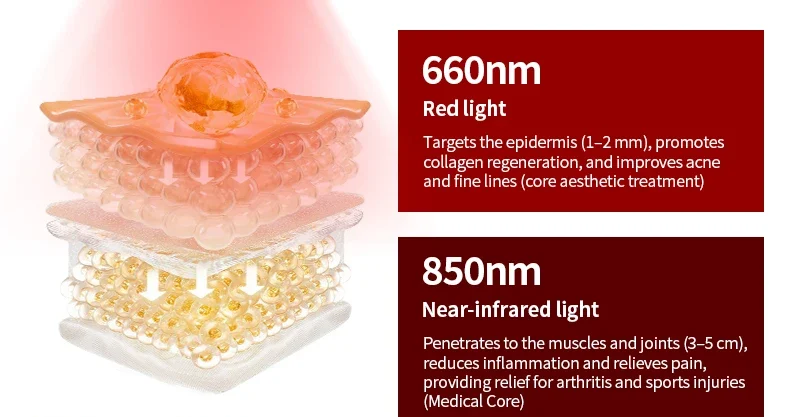
In terms of depth of action, red light primarily targets the epidermis and dermis, making it ideal for skin repair, collagen regeneration, and the alleviation of superficial inflammation. Near-infrared light penetrates more deeply—reaching subcutaneous fat, muscle tissue, and superficial joints—and is often combined with red light for comprehensive, full-layer treatment. In contrast, the far-infrared therapy commonly found on the market operates primarily through a thermal effect; by raising local temperatures to stimulate blood circulation, it functions essentially as a form of heat therapy and lacks the PBM effect.
The difference is also intuitively perceptible: standard red light therapy involves minimal heat sensation, relying instead on low-intensity light exposure. Far-infrared therapy, however, generates intense warmth—its therapeutic mechanism depends on heat—and prolonged use carries a risk of low-temperature burns.
In summary, red light therapy is a professional treatment modality grounded in the science of photobiomodulation and validated by NASA research, adhering to specific standards for wavelength and dosage. It is neither merely an ordinary red light nor equivalent to traditional infrared heat therapy. Understanding these fundamental distinctions is essential for the correct selection and use of red light therapy devices.
Red light therapy and infrared therapy are often conflated, yet they belong to distinct spectral bands and differ fundamentally in their mechanisms of action and applications. Regarding spectral characteristics, red light falls within the visible spectrum (600–700 nm) and appears red to the naked eye, whereas infrared light is invisible (wavelengths exceeding 700 nm) and is further categorized into near-infrared (700–1400 nm), mid-infrared, and far-infrared. The 810 nm and 850 nm wavelengths frequently found in red light therapy devices actually fall within the near-infrared range; like red light, they rely on the photobiomodulation (PBM) effect and are distinct from traditional infrared therapy.
In terms of depth of action, red light primarily targets the epidermis and dermis, making it ideal for skin repair, collagen regeneration, and the alleviation of superficial inflammation. Near-infrared light penetrates more deeply—reaching subcutaneous fat, muscle tissue, and superficial joints—and is often combined with red light for comprehensive, full-layer treatment. In contrast, the far-infrared therapy commonly found on the market operates primarily through a thermal effect; by raising local temperatures to stimulate blood circulation, it functions essentially as a form of heat therapy and lacks the PBM effect.
The difference is also intuitively perceptible: standard red light therapy involves minimal heat sensation, relying instead on low-intensity light exposure. Far-infrared therapy, however, generates intense warmth—its therapeutic mechanism depends on heat—and prolonged use carries a risk of low-temperature burns.
In summary, red light therapy is a professional treatment modality grounded in the science of photobiomodulation and validated by NASA research, adhering to specific standards for wavelength and dosage. It is neither merely an ordinary red light nor equivalent to traditional infrared heat therapy. Understanding these fundamental distinctions is essential for the correct selection and use of red light therapy devices.
2. How Does Red Light Therapy Work?
The core therapeutic effect of red light therapy does not stem from thermal stimulation but rather from precise photochemical reactions based on photobiomodulation (PBM): upon penetrating the skin, red light photons of specific wavelengths are absorbed by key intracellular organelles and enzymes, triggering a cascade of physiological reactions that ultimately enhance cellular function, improve microcirculation, and balance inflammation.
2.1 Mitochondria: The Core Target of Red Light and the Cell’s Energy Factory
Mitochondria serve as the “powerhouses” of eukaryotic cells, generating over 95% of the energy required for the body’s vital activities through aerobic respiration. Beyond energy production, mitochondria play a pivotal role in key physiological processes—such as the regulation of oxidative stress, inflammatory signaling, and apoptosis—making them essential organelles for maintaining normal cellular function and determining tissue repair capacity.
When the body experiences tissue damage, chronic inflammation, natural aging, or metabolic decline, mitochondrial function is often the first to be compromised. Issues such as reduced respiratory chain efficiency, insufficient energy output, and the excessive accumulation of reactive oxygen species (ROS) arise; these, in turn, exacerbate cellular damage and perpetuate inflammation, creating a vicious cycle of “functional decline leading to worsening damage.”
Mitochondria are the primary targets of photobiomodulation. Red light (630–660 nm) and near-infrared light (810–850 nm) can penetrate the epidermis to reach the dermis and subcutaneous tissues, where they are absorbed by specific mitochondrial chromophores, thereby positively modulating mitochondrial function. Unlike pharmacological interventions that alter cellular metabolism via exogenous chemicals, red light activates the cell’s intrinsic metabolic potential through physical light signals. This physiological mode of regulation is the key reason for its high safety profile and broad range of applications.
2.2 Cytochrome c oxidase (CCO): A key “light receiver” that captures light signals
The key to red light’s ability to precisely regulate mitochondrial function lies in Cytochrome C Oxidase (CCO), an enzyme located on the inner mitochondrial membrane. Widely recognized in the scientific community as the primary photoreceptor for red light, CCO serves as the terminal enzyme of the mitochondrial respiratory chain (Respiratory Chain Complex IV) and directly determines the efficiency of mitochondrial energy production.
During normal aerobic respiration, CCO mediates the final step of the electron transport chain: it transfers energy-carrying electrons to oxygen molecules and catalyzes the reaction between oxygen and hydrogen ions to form water. Simultaneously, it drives transmembrane proton transport, establishing a proton concentration gradient across the inner mitochondrial membrane that provides the driving force for ATP synthesis.
CCO exhibits specific absorption peaks for different wavelengths of light depending on its redox state; the oxidized form of CCO displays two distinct absorption peaks—one in the 620–680 nm range (red light) and another in the 820–860 nm range (near-infrared light). When CCO absorbs red light photons at these specific wavelengths, its redox state shifts, significantly enhancing the enzyme’s catalytic activity and accelerating the rate of electron transport, thereby making the entire mitochondrial respiratory chain operate more efficiently.
This provides a scientific explanation for why “ordinary red light” is ineffective: only narrow-spectrum wavelengths that precisely match CCO’s absorption peaks can effectively trigger photobiological reactions. Ordinary red light, characterized by a broad spectrum and mixed wavelengths, cannot be efficiently absorbed by CCO and, consequently, fails to induce physiological changes at the cellular level.
2.3 Enhanced ATP Synthesis: Providing Core Energy Support for Cellular Repair
Adenosine triphosphate (ATP) serves as the “energy currency” of the cell; all physiological activities—such as cell division and proliferation, protein synthesis, tissue repair, and immune responses—rely on ATP for energy. When cells are damaged, inflamed, or aging, mitochondrial function declines and ATP reserves become insufficient, significantly impairing the cell’s self-repair capabilities.
When CCO activity increases and the efficiency of the mitochondrial respiratory chain improves, the proton gradient across the inner mitochondrial membrane strengthens significantly, driving ATP synthase to produce more ATP. With boosted cellular energy reserves, previously suppressed repair mechanisms are reactivated:
– Dermal fibroblasts gain ample energy to accelerate the synthesis of collagen, elastin, and the extracellular matrix, thereby speeding up wound healing and skin repair;
– Muscle cells experience improved protein synthesis efficiency, accelerating the repair of micro-injuries sustained during exercise and alleviating muscle soreness and fatigue;
– Immune cells receive sufficient energy to clear damaged tissues and pathogens more efficiently, accelerating the resolution of inflammation.
In short, red light therapy works by optimizing mitochondrial function to effectively “recharge” cells, enabling the body to restore its health through its own innate repair mechanisms rather than relying on external forces to perform the cells’ work.
2.4 Nitric oxide (NO) release: A key signaling molecule for unlocking microcirculation.
In addition to boosting ATP synthesis, another core function of red light therapy is promoting the release of nitric oxide (NO). This is a key mechanism behind its ability to improve local circulation and alleviate pain, and it is the primary reason many users quickly experience relief from soreness and aching.
Nitric oxide is a vital endogenous signaling molecule in the human body; its primary roles include relaxing vascular smooth muscle, dilating microvessels, and increasing local blood flow, alongside regulating immune function and inhibiting platelet aggregation. Many issues involving chronic pain and slow tissue repair stem from impaired local microcirculation: when oxygen and nutrients fail to reach damaged tissues, and metabolic waste and inflammatory factors cannot be promptly cleared, injuries persist and pain becomes recurrent.
Red light promotes NO release through two main pathways: first, the increase in cytochrome c oxidase (CCO) activity triggers the dissociation and release of stored NO from mitochondria into the cytoplasm; second, red light activates endothelial nitric oxide synthase (eNOS) within vascular endothelial cells, stimulating the synthesis of endogenous NO.
The released NO acts on local blood vessels, causing microvessel dilation and a significant increase in blood flow. This serves a dual purpose: it delivers abundant oxygen and nutrients to damaged tissues, accelerating the repair process, while simultaneously speeding up the clearance of metabolic waste and inflammatory mediators, thereby rapidly alleviating discomfort such as soreness and pain.
2.5 Inflammation Regulation: Bidirectional modulation to alleviate chronic inflammation at its source.
Inflammation is a normal bodily defense mechanism; however, persistent, low-grade chronic inflammation is a primary driver of the vast majority of chronic ailments and tissue degeneration—underlying issues ranging from skin sensitivity and aging to muscle strain and joint stiffness. The ability of red light therapy to modulate inflammation is a key reason for its wide range of applications; unlike pharmaceutical interventions that merely suppress inflammation in one direction, red light therapy facilitates a physiological, bidirectional regulatory process.
Its anti-inflammatory effects are primarily achieved through three core pathways:
1. Inhibiting the overexpression of pro-inflammatory factors: Red light downregulates levels of pro-inflammatory factors such as tumor necrosis factor-alpha (TNF-α), interleukin-1 beta (IL-1β), and interleukin-6 (IL-6), thereby preventing the inflammatory response from spiraling out of control and minimizing ongoing damage to healthy tissue.
2. Balancing oxidative stress: Chronic inflammation and oxidative stress are mutually reinforcing. Red light boosts the activity of endogenous antioxidant enzymes—such as superoxide dismutase (SOD) and glutathione peroxidase—to scavenge excess reactive oxygen species (ROS), reduce oxidative damage, and break the vicious cycle linking oxidative stress and inflammation.
3. Modulating immune cell polarization: Red light promotes the polarization of macrophages from the pro-inflammatory M1 phenotype to the reparative M2 phenotype, accelerating the clearance and reconstruction of damaged tissue and facilitating the transition of inflammation from the “destructive phase” to the “repair phase.”
It is important to note that red light therapy does not suppress the body’s normal acute inflammatory defense response; instead, it corrects the imbalance associated with chronic inflammation and helps restore immune homeostasis. Consequently, there is no risk of compromised immunity resulting from long-term use.
From the moment photons penetrate the skin and are absorbed by cytochrome c oxidase (CCO) to activate mitochondria—leading to increased ATP production, nitric oxide (NO) release, and inflammatory balance—the complete mechanism of action essentially involves using light signals to activate the body’s innate repair potential. This fundamental cellular-level mechanism explains why red light therapy is effective across diverse areas such as skin repair, muscle recovery, joint care, and the management of sub-health conditions, and it is the reason why the scope of its application continues to expand after decades of research.
3. Scientific Evidence Behind Red Light Therapy
The clinical value of red light therapy is by no means a matter of hearsay or marketing rhetoric; rather, it is an evidence-based therapeutic modality grounded in thousands of peer-reviewed studies. To date, authoritative academic databases such as PubMed have indexed over 5,000 studies on photobiomodulation. These encompass a comprehensive chain of evidence—ranging from in vitro cellular experiments and animal models to randomized controlled trials (RCTs) and large-scale meta-analyses—spanning diverse fields such as dermatology, sports medicine, pain management, and rehabilitation medicine. Robust evidence-based data serves as a cornerstone for establishing professional credibility (E-E-A-T); the following section systematically outlines the key clinical research evidence across five major areas of application.
3.1 Dermatology research
The skin is the area where red light therapy is most widely applied and extensively studied; research covers various aspects such as anti-aging repair, inflammation reduction, and the repair of photodamage, with much of the evidence derived from high-quality randomized, double-blind, controlled trials.
A landmark randomized controlled trial published in the Journal of Cosmetic Dermatology involved 136 healthy subjects with signs of facial photoaging who underwent facial red light therapy (660 nm) twice weekly for 12 weeks. The results demonstrated significant improvements in facial fine lines and skin roughness; the density of type I collagen in the dermis increased by an average of 17%, and the arrangement of elastic fibers became more organized. Furthermore, 83% of subjects reported noticeable improvements in skin firmness and radiance, with no serious adverse reactions observed.
Regarding acute UV-induced skin damage, a controlled study published in Photomedicine and Laser Surgery in 2019 confirmed that timely red light intervention following UVB exposure reduced erythema severity by 32% and shortened the time required for skin barrier repair after sunburn by approximately 40%. The underlying mechanisms are directly linked to red light’s ability to inhibit the release of pro-inflammatory factors and enhance the activity of endogenous antioxidant enzymes.
Additionally, several small-scale clinical studies addressing inflammatory skin conditions—such as mild-to-moderate acne and rosacea—have shown that red light therapy can reduce the number of inflammatory lesions by inhibiting excessive sebum secretion and modulating the skin’s immune status. Unlike topical medications, it does not cause common side effects such as skin irritation, making it suitable for long-term maintenance care.
3.2 Pain Management Research
Chronic musculoskeletal pain is a primary clinical application for red light therapy. Research has not only validated its analgesic efficacy but also demonstrated its safety advantages over traditional physical therapies; consequently, it has been incorporated into adjunctive pain management protocols in rehabilitation guidelines across multiple countries.
A systematic review and meta-analysis published in Osteoarthritis and Cartilage in 2021—encompassing 22 high-quality randomized controlled trials and a total of 1,128 patients with knee osteoarthritis—revealed that combined red and near-infrared light therapy reduced mean Visual Analog Scale (VAS) pain scores by 31% and increased knee range of motion by 12°. Patients also experienced significant improvements in daily walking ability and stair-climbing function. These benefits persisted for more than eight weeks post-intervention, with an adverse event rate of less than 1%—far lower than the risk of gastrointestinal side effects associated with non-steroidal anti-inflammatory drugs (NSAIDs).
Studies on chronic neck/shoulder pain and low back pain have yielded consistent findings. A 2022 randomized controlled trial published in Pain Medicine, involving 196 patients with chronic non-specific low back pain, demonstrated that a four-week red light therapy regimen (administered three times weekly) reduced pain scores by 27% and improved the Oswestry Disability Index (ODI) by 24%. The analgesic mechanisms involved include peripheral effects—such as promoting nitric oxide (NO) release, improving local microcirculation, and accelerating the metabolism of inflammatory factors—as well as central analgesic effects, such as modulating nociceptive signal transmission in the spinal dorsal horn and increasing endorphin levels.
For systemic pain syndromes like fibromyalgia, red light therapy has also been shown to effectively reduce systemic pain sensitivity while alleviating associated fatigue and sleep disturbances.
3.3 Muscle recovery research
In the field of sports medicine, red light therapy has been adopted into the routine recovery protocols of numerous professional sports teams due to its ability to accelerate post-exercise injury repair and shorten recovery times. Research in this area focuses on key indicators such as delayed onset muscle soreness (DOMS), markers of muscle damage, and the rate of strength recovery.
A controlled study published in the Journal of Strength and Conditioning Research in 2018 involved 30 healthy young men performing high-intensity resistance training; the intervention group received whole-body red light irradiation (660 nm + 850 nm) within one hour post-exercise. Results showed that, compared to the control group, the intervention group reported 22% and 28% lower DOMS scores at 24 and 48 hours post-exercise, respectively. Additionally, serum creatine kinase (CK)—a key marker of muscle damage—levels were 22% lower, and the rate of peak strength recovery improved by 15%. These findings confirm that red light therapy effectively mitigates post-exercise muscle micro-damage and accelerates functional recovery.
Research on endurance sports has similarly validated the therapy’s recovery benefits. A 2023 trial involving marathon runners demonstrated that those receiving red light therapy for three consecutive days post-race experienced significantly less muscle fatigue and lower-limb swelling compared to the control group; furthermore, their endurance performance recovery rate after three days was 19% higher. Mechanistic studies indicate that red light not only accelerates muscle fiber repair by boosting ATP synthesis but also promotes the proliferation and differentiation of muscle satellite cells, providing the cellular foundation for muscle tissue repair and remodeling. Moreover, its anti-inflammatory and circulation-enhancing effects facilitate the clearance of metabolic waste and alleviate post-exercise muscle soreness, making it one of the few evidence-based physical recovery methods that carries no risk of doping violations.
3.4 Sleep Research
Sleep regulation has emerged as the fastest-growing consumer application for red light therapy in recent years. Although the volume of research is smaller compared to studies on skin health and pain management, existing randomized controlled trials have preliminarily confirmed its efficacy in improving sleep quality—without the risk of dependency associated with pharmaceutical sleep aids.
A randomized, double-blind, controlled trial published in Chronobiology International in 2023 involved 62 adults suffering from primary insomnia. Participants in the intervention group underwent 20 minutes of whole-body red light therapy daily, one hour before bedtime, over a four-week period. Results showed a 29% reduction in sleep onset latency and a 41% decrease in the number of nighttime awakenings. Polysomnography revealed an 18% increase in the proportion of deep slow-wave sleep, while the Pittsburgh Sleep Quality Index (PSQI) total score dropped by 34%; notably, no adverse effects, such as next-day drowsiness, were observed.
The mechanisms by which red light improves sleep have been preliminarily validated. On one hand, unlike blue light, long-wavelength red light does not suppress melatonin secretion; instead, it modulates pineal gland function to promote the rhythmic release of melatonin, thereby helping to stabilize circadian rhythms. On the other hand, red light can lower nighttime cortisol levels and alleviate chronic pain and muscle tension, physiologically eliminating factors that disrupt sleep.
Small-scale studies targeting populations with a high prevalence of sleep disorders—such as patients with chronic pain and menopausal women—have also demonstrated that red light therapy can indirectly enhance sleep quality by alleviating primary symptoms. This creates a virtuous cycle of “pain relief, improved sleep, and accelerated physical recovery.” Currently, larger-scale multicenter clinical trials are underway, and the body of evidence supporting this therapy continues to expand.
3.5 Wound healing research
Wound healing was the first field where red light therapy achieved clinical application; research in this area dates back to NASA’s early space medicine experiments. Currently, it demonstrates significant clinical value as an adjunctive treatment for chronic, hard-to-heal wounds—particularly those that respond poorly to conventional care, such as diabetic foot ulcers, pressure ulcers, and venous ulcers.
A systematic review published in the Journal of the European Academy of Dermatology and Venereology in 2017—encompassing 18 clinical studies and 987 patients with chronic wounds—revealed that combining red light therapy with standard wound care increased the complete healing rate of diabetic foot ulcers by 45% and shortened the average healing time by 12 days, while reducing the incidence of wound infection by 32% compared to the control group. For second-degree burn wounds, red light intervention reduced the time required for epithelialization by approximately 30% and resulted in less scar hyperplasia post-healing.
Extensive basic research has elucidated the underlying mechanisms: red light stimulates fibroblast proliferation and promotes the synthesis of collagen and the extracellular matrix. Simultaneously, it accelerates neovascularization by promoting nitric oxide (NO) release, thereby supplying the wound with ample oxygen and nutrients to drive granulation tissue growth. Furthermore, red light modulates the local immune environment of the wound, enhancing macrophage phagocytosis to lower infection risk while mitigating secondary wound damage caused by excessive inflammatory responses.
Red light therapy is currently recognized in wound care guidelines across multiple countries as an adjunctive treatment for chronic, hard-to-heal wounds, serving as an effective supplement to conventional care. It is particularly suitable for populations with compromised healing capabilities, such as the elderly and patients with diabetes.
Overall, the body of evidence supporting red light therapy is characterized by robust basic research and a tiered progression of clinical evidence. High-quality clinical evidence already exists in fields such as dermatology, pain management, and wound healing, while research into emerging areas—including sleep and metabolic regulation—is rapidly expanding. It should be noted that these clinical benefits rely on the use of appropriate wavelengths, standardized dosages, and proper application protocols; improper parameters or operational errors not only fail to achieve the desired outcomes but may also introduce potential risks.
4. Benefits of Red Light Therapy
Based on the cellular-level mechanisms of photobiomodulation, the benefits of red light therapy span multiple areas—including skin repair, athletic recovery, pain management, sleep regulation, and hair care—all supported by clinical research. Unlike targeted medications that address only specific symptoms, red light therapy enhances the tissue’s intrinsic self-repair capabilities at a fundamental level by optimizing cellular energy metabolism, balancing inflammatory states, and improving local microcirculation. Consequently, it can simultaneously address various interconnected issues, making it an ideal choice for long-term, daily health maintenance. The following section breaks down the specific benefits and target demographics of red light therapy across five core application areas.
4.1 Skin Health
Skin health is the most widely recognized and popular benefit of red light therapy. It addresses three core needs—anti-aging repair, barrier maintenance, and inflammation soothing—making it suitable for daily skincare across all age groups. Red light penetrates the epidermis to reach the dermis, where it activates fibroblasts and stimulates the synthesis of Type I and Type III collagen and elastin. Consistent long-term use helps diminish fine lines and dehydration lines, enhances skin firmness and plumpness, and improves skin roughness and dullness caused by photoaging, resulting in a more luminous, translucent complexion.
For issues involving a compromised skin barrier—such as sensitive skin or rosacea—red light therapy modulates local inflammatory factors. This alleviates symptoms like redness, burning, and itching, accelerates barrier repair, and reduces skin sensitivity to external irritants. Regarding inflammatory acne and post-acne marks, red light inhibits excessive sebum secretion and reduces hair follicle inflammation to prevent new breakouts; simultaneously, it boosts blood circulation in the affected areas, accelerates pigment metabolism and tissue repair, and shortens the time it takes for acne marks to fade.
Unlike high-potency skincare ingredients, red light therapy works through a physical mechanism; it does not disrupt the skin barrier or require a tolerance-building period. It can be seamlessly integrated into daily skincare routines and is particularly suitable for individuals with sensitive skin who cannot tolerate retinoids or high concentrations of acids, serving as a gentle, long-term solution for anti-aging and barrier maintenance.
4.2 Muscle Recovery
Whether for post-workout recovery among fitness enthusiasts or for relieving daily muscle fatigue in office workers who sit for long periods, red light therapy offers significant benefits for muscle repair and fatigue alleviation. High-intensity exercise causes micro-damage to muscle fibers, accompanied by inflammation and the accumulation of metabolic waste; this leads to Delayed Onset Muscle Soreness (DOMS)—a condition that typically lasts two to three days and can impair subsequent training performance. Red light therapy enhances ATP synthesis efficiency in muscle cells, accelerating the repair of micro-damage. It also boosts local blood circulation and speeds up the clearance of metabolic byproducts such as lactic acid and creatine kinase, effectively reducing post-exercise soreness and shortening the muscle recovery period.
For muscle stiffness and strain in the neck, shoulders, and back caused by prolonged sitting, red light penetrates deeply to relax tense muscle fascia. It improves local blood and oxygen supply and alleviates persistent muscle tension and soreness. Unlike heat therapy, it does not rely on high temperatures, nor does it cause skin overheating or the rapid return of symptoms once the treatment ends.
Consistent use not only lowers the risk of post-exercise muscle strains but also helps maintain optimal fitness levels and training frequency while alleviating chronic muscle strain associated with sedentary work—making it an ideal physical recovery method for both fitness enthusiasts and office workers.
4.3 Joint Pain
Chronic joint pain is a common issue affecting the quality of life for middle-aged and elderly individuals, as well as those prone to strain-related injuries. Red light therapy addresses joint pain not merely by providing temporary numbness or analgesia, but by improving the internal joint environment—specifically targeting inflammation and circulation—to achieve long-lasting pain relief and functional improvement. For common degenerative conditions such as knee osteoarthritis, frozen shoulder (adhesive capsulitis), and cervical spine degeneration, red and near-infrared light penetrate superficial joint tissues to alleviate chronic inflammation within the joint cavity and reduce inflammatory fluid accumulation. Simultaneously, the therapy promotes blood circulation in the soft tissues surrounding the joint, easing associated muscle spasms and stiffness.
Most users report a significant reduction in pain and an increased range of motion in daily activities—such as climbing stairs, raising their arms to comb their hair, or overcoming joint stiffness after prolonged periods of sitting at a desk—after two to four weeks of regular use. Unlike oral painkillers, red light therapy is a localized physical intervention; it avoids side effects such as gastrointestinal irritation or metabolic strain on the liver and kidneys, carries no risk of drug dependency, and is ideal for individuals requiring long-term joint care.
Red light therapy also serves as an effective adjunctive treatment during the recovery phase of acute sports-related joint sprains and contusions. It accelerates the reduction of swelling and soft tissue repair, shortens the time required to regain joint function, and offers a gentle, effective solution for both sports rehabilitation and routine joint maintenance.
4.4 Sleep Quality
Poor sleep quality is a common health concern today, and red light therapy offers a gentle, non-pharmacological solution for improvement. It is particularly effective for issues such as difficulty falling asleep, light sleep, and frequent waking caused by irregular schedules, physical tension or pain, and stress or anxiety. Unlike blue light—which suppresses melatonin secretion and disrupts circadian rhythms—long-wavelength red light has minimal impact on the pineal gland; instead, it helps regulate the body’s biological clock, promotes the natural rhythmic secretion of melatonin, and prepares the body to fall asleep more quickly.
Additionally, red light lowers nighttime cortisol levels, relieves muscle tension throughout the body, and mitigates sleep disturbances caused by chronic pain, thereby physiologically eliminating various obstacles to falling asleep. Data shows that a 15–20 minute full-body red light session before bed helps most users fall asleep faster, wake up less frequently during the night, and achieve a higher proportion of deep sleep; users also report feeling refreshed and energized upon waking, without any grogginess.
Compared to sleep aids and exogenous melatonin supplements, red light therapy carries no risk of dependency or next-day “hangover” effects. Long-term use helps stabilize circadian rhythms, making it an ideal sleep-management strategy for shift workers, frequent travelers dealing with jet lag, and middle-aged or older adults experiencing declining sleep quality.
4.5 Hair Growth
Hair care via red light therapy has garnered significant attention in recent years, offering supportive benefits for common hair loss issues such as androgenetic alopecia, postpartum hair loss, and stress-induced telogen effluvium. A primary cause of hair loss is insufficient energy within hair follicle cells and poor microcirculation; these factors trigger premature entry into the resting phase (telogen), causing follicles to atrophy, thin, and eventually shed. Red light penetrates the scalp to reach hair follicles in the dermis, boosting energy metabolism in dermal papilla cells. This extends the growth phase (anagen) and shortens the resting phase while dilating scalp microvessels to enhance nutrient supply, thereby reducing hair loss and promoting the thickening of fine, limp strands.
For conditions such as early-stage androgenetic alopecia, postpartum hair loss, and diffuse thinning caused by stress or sleep deprivation, consistent use over 3–6 months typically yields visible results: reduced shedding, a narrower hair part, and the growth of new vellus hair. Unlike topical hair-growth medications, red light therapy does not cause an initial “shedding phase” or side effects like scalp irritation or hypertrichosis. It can be used either as a standalone treatment or combined with other hair care regimens to enhance overall results.
It is important to note that red light therapy is effective only when hair follicles have not yet completely died; it offers limited improvement for severe hair loss where follicles have fully closed. Consequently, early intervention yields the best results, making it an ideal long-term strategy for daily scalp anti-aging and hair loss prevention.
Overall, the benefits of red light therapy are not isolated but represent a comprehensive improvement in cellular function. Many users find that, alongside better scalp and skin health, they also experience improvements in sleep quality and a reduction in muscle fatigue. This multidimensional therapeutic value is a key reason why red light therapy has transitioned from professional medical settings to become a staple of daily home care.
5. Red Light Therapy Wavelengths: Full Breakdown
Different light wavelengths serve different purposes. We split them into easy-to-scan categories with use cases, pros and limitations for home users. All recommended wavelengths fall within the genuine RLT 600–900nm range.
5.1 Popular RLT Wavelengths Overview
| Wavelength | Visible? | Best For | Key Notes for Home Use |
| 450nm Blue | Yes | Inhibit Propionibacterium acnes and improve mild acne prone skin | Short term use may be effective, but long-term use may cause pigmentation, |
| 630nm Red | Yes | Minor surface wounds, quick skin brightening | Secondary skin care wavelength |
| 660nm Red | Yes | Facial care, acne scars, skin repair, scalp health | Top choice for face & skin; no eye protection required |
| 810nm Near-Infrared | No | Tendon injuries, targeted pain relief | Mostly for professional clinics, rare for home use |
| 830nm Near-Infrared | No | Workout recovery, muscle soreness | Ideal for athletes and active users |
| 850nm Near-Infrared | No | Joint pain, back strain, sleep support, full-body relief | Top near-infrared for home full-body use |
| 940nmNear-Infrared | No | Heat-based relief (not pure RLT) | Avoid long daily use; creates excess heat |
| 1060nmNear-Infrared | No | Still in the research stage, claiming to potentially act on fat or the brain | Professional level selection plan |
5.2 Individual Wavelength Guides
5.2.1 450nm Blue Light (Not Red Light Therapy)
What is 450nm blue light?
450nm blue light is a visible, high-energy wavelength often used for acne treatment. It targets Propionibacterium acnes bacteria on the skin surface. However, it is not considered true red light therapy (RLT) and works through a different mechanism (photodynamic antibacterial effect).
Best for: Mild to moderate inflammatory acne, reducing surface bacteria, short-term acne management.
Benefits: It can kill acne causing bacteria without antibiotics and in some cases inhibit sebaceous gland activity. It is often used in dermatological clinics for local treatment.
Limitations: Unable to penetrate deep tissues, ineffective for pain, inflammation, or muscle recovery; Long term use may lead to skin pigmentation or eye fatigue; Not belonging to the standard RLT band (600-900nm); It is recommended to wear goggles to avoid prolonged exposure.
5.2.2 630nm Red Light (Skin Support & Minor Healing)
What is 630nm red light?
630nm red light is a visible wavelength that sits close to 660nm but with slightly shallower skin penetration. It is often used to support superficial wound healing, temporary skin brightening, and as a complementary wavelength in skincare devices.
Best for: Scratches on the epidermis, mild redness, postoperative skin relief, and temporary improvement in complexion.
Benefits: Friendly to sensitive skin, can be used in combination with 660nm, safe for naked eye use.
Limitations: The ability to promote collagen remodeling is weaker than 660nm, and has little effect on deep tissues (muscles, joints), making it unsuitable as an independent anti-aging or pain relief solution.
5.2.3 660nm Red Light (Most Popular for Skin)
What is 660nm red light?
660nm red light is a visible, skin-focused RLT wavelength. It penetrates middle skin layers to boost collagen, fade acne marks, repair sensitive skin and improve scalp health. It is safe for bare-eye use during facial sessions.
Best for: Facial anti-aging, red acne scars, sensitive skin, scalp care, minor surface cuts
Benefits: Improves skin texture, strengthens skin barrier, reduces daily hair shedding
Limitations: Does not penetrate deep enough for joint or severe muscle pain
5.2.4 810nm Near Infrared Light
What is 810nm Near-Infrared light?
810nm light penetrates deep into tendons and connective tissues. It is widely used in professional rehabilitation centers.
Best for: Tendon recovery, sports injuries, clinical physical therapy
Limitations: Rare in standard home devices; eye protection is mandatory
5.2.5 830nm Near Infrared Light
What is 830nm Near-Infrared light?
This wavelength balances penetration and coverage, perfect for active people.
Best for: Post-workout muscle soreness, general athletic recovery
Limitations: Less effective for sleep and full-body chronic fatigue
5.2.6 850nm Near Infrared Light (Top Full-Body Home Pick)
What is 850nm red light therapy?
850nm near-infrared light is the gold standard for full-body home RLT. It reaches deep muscles, joints and soft tissue to ease back pain, joint stiffness and improve sleep quality. Always wear eye protection when using this wavelength.
Best for: Lower back pain, joint stiffness, chronic fatigue, better sleep, full-body recovery
Benefits: Reduces long-term inflammation, shortens sleep onset time
Limitations: Invisible light; eye protection is required at all times
5.2.7 940nm Near Infrared Light (Heat‑Dominant, Not Standard RLT)
What is 940nm near infrared light?
940nm is a longer near‑infrared wavelength that produces noticeable tissue heating. Unlike true RLT (which relies on non‑thermal photobiomodulation), 940nm acts more like a mild heat therapy. It is rarely found in pure RLT devices and is often mixed with far‑infrared heating elements.
Best for: Temporary relief of muscle stiffness, mild joint heat compress, relaxation (similar to a heat pack).
Benefits: Provides comfortable warmth and increases local blood flow through thermal effects.
Limitations: Based on heat rather than non heat RLT, there is a risk of skin overheating if used for too long; Not recommended for long-term daily use in household RLT; Wear goggles and cover your face when using.g.
5.2.8 1060nm Near Infrared Light
What is 1060nm near infrared light?
1060nm is a deep‑penetrating near‑infrared wavelength still under active research. Some early studies suggest it might influence fat cells or brain tissue, but no robust home‑use evidence exists for standard RLT benefits like pain relief, skin repair, or sleep improvement.
Best for: primarily used in professional and clinical research environments.
Benefits: Theoretically, it has deeper penetration power (up to several centimeters) and is currently being studied for preliminary possibilities in body shaping.
Limitations: Lack of long-term safety guidelines for use; Cannot replace mature bands such as 660nm or 850nm; Goggles must be worn.
5.3 Recommended Wavelength Combinations for Home Use
You do not need to turn on all wavelengths at once. Pair wavelengths based on your goals:
- Skin Care: 660nm (standalone)
- Athlete Recovery: 830nm + 850nm
- Full-Body Wellness & Sleep: 660nm + 850nm (most popular home combo)
- Spot Pain Relief: 850nm (standalone)
The wavelength range of 480nm to 1060nm covers from blue light (antibacterial, acne treatment) to red and near-infrared light (repair, pain relief, sleep improvement), as well as the still under research deep red external light. Among them, 600-900nm is the clinically validated core range of red light therapy.
6. Red Light Therapy for Skin Health
As the most mature consumer application of photobiomodulation technology, red light therapy has transcended the limitations of single-function treatments to offer value across a wide spectrum of skin health needs—seamlessly adapting to scenarios ranging from daily at-home skincare to professional treatment support. Unlike functional skincare products that rely on ingredient penetration or medical aesthetic procedures that depend on trauma-induced repair, red light therapy employs non-invasive light signals to activate the skin cells’ intrinsic repair mechanisms. Suitable for diverse skin types and conditions, it serves as a highly flexible, non-invasive complement to modern skincare regimens. The following analysis breaks down its specific value and target demographics across four common application scenarios.
6.1 Daily Anti-Aging Maintenance
As the most mature consumer application of photobiomodulation technology, red light therapy has transcended the limitations of single-function treatments, seamlessly integrating into diverse scenarios ranging from daily home skincare to professional treatment support. Unlike functional skincare products that rely on ingredient penetration or medical aesthetic procedures that depend on trauma-induced repair, red light therapy utilizes non-invasive light signals to activate the skin cells’ endogenous repair mechanisms. It is highly versatile, catering to various skin types and conditions, and serves as a flexible, non-invasive supplement to modern skincare regimens. The following section breaks down its specific value and target demographics across four common usage scenarios.
Addressing signs of photoaging and natural aging—such as fine lines caused by dryness, sagging, dullness, and rough texture—red light penetrates the epidermis to activate fibroblasts in the dermis. This stimulates the continuous synthesis of collagen and elastin, gradually filling in fine lines, enhancing skin firmness, and improving dullness caused by slowed metabolism.
Compared to medical aesthetic anti-aging treatments like radiofrequency (RF) or fractional lasers, red light therapy is non-invasive and requires no downtime; it causes no post-treatment reactions such as scabbing or hyperpigmentation. It is suitable both as a long-term daily anti-aging measure and as a maintenance regimen between professional aesthetic treatments to slow the rate of collagen loss. After 8–12 weeks of consistent use, most users observe increased skin plumpness, reduced makeup caking, and an overall improvement in skin texture, resulting in a smoother, more radiant complexion.
6.2 Repair the sensitive skin barrier
This treatment is suitable for individuals experiencing seasonal redness, barrier damage caused by over-skincare, rosacea in a stable phase, or recovery from steroid-induced skin issues. These individuals often cannot tolerate potent active ingredients like acids or retinoids; their skincare choices are limited, and even minor errors can aggravate sensitivity symptoms.
Red light therapy is one of the few treatments safe for use during periods of skin sensitivity. Typically paired with gentle, reparative skincare products, it imposes no additional ingredient burden or risk of allergic reaction. By modulating local inflammatory factors, it rapidly alleviates discomfort such as redness, burning sensations, dryness, and itching. Simultaneously, it accelerates the repair of the stratum corneum and the skin’s lipid barrier, gradually enhancing the skin’s tolerance to external irritants. Consistent, long-term use reduces the frequency of recurring sensitivity flare-ups and helps fragile skin gradually establish a healthy barrier function, making it an excellent choice for the daily maintenance of problematic skin.
6.3 Repair for Acne-Prone Skin and Red Acne Marks
This treatment protocol covers two distinct phases: the active breakout stage and the post-acne mark repair stage. It is suitable for individuals with mild-to-moderate inflammatory acne, those with residual red marks following acne resolution, and those with sensitive, acne-prone skin that cannot tolerate topical acne medications.
During the active breakout stage, it alleviates perifollicular inflammation, reduces redness, swelling, and pain, shortens the acne lifecycle, and decreases the number of inflammatory papules. During the repair stage, it accelerates local microcirculation, promotes the clearance of inflammatory byproducts and the breakdown of hemoglobin, and significantly shortens the time required for red acne marks to fade.
Unlike chemical peels or topical acne medications, red light therapy does not compromise the skin barrier or cause side effects such as dryness and peeling. It can be used alone for the daily maintenance of mild acne-prone skin or combined with gentle acne products to enhance efficacy while minimizing the risk of irritation associated with potent active ingredients.
6.4 Post-Sun and Post-Medical Aesthetic Treatment Repair
This application falls under the category of emergency and supportive skincare, suitable for addressing acute skin damage caused by prolonged sun exposure and for home-based aftercare following minimally invasive aesthetic procedures.
When symptoms such as redness, a burning sensation, or stinging occur after routine outdoor activities or beach vacations, a timely 10-minute red light treatment can rapidly suppress acute inflammatory responses, alleviate erythema and pain, and reduce the likelihood of subsequent peeling and pigmentation.
Following aesthetic procedures—such as IPL (Intense Pulsed Light) skin rejuvenation, fractional laser treatments, microneedling, or mesotherapy—incorporating red light therapy into a home-care routine accelerates epidermal cell renewal. This shortens the recovery period for post-procedure redness, swelling, and scabbing while lowering the risk of post-inflammatory hyperpigmentation (often referred to as “rebound darkening”). It is currently a recommended post-procedure home-care regimen by many professional aesthetic clinics. Additionally, red light therapy can assist in accelerating the healing of minor superficial abrasions and small wounds, thereby reducing the potential for excessive scarring.
Overall, the core advantages of red light therapy in skincare lie in its versatility and high safety profile. It serves effectively both as a long-term anti-aging maintenance tool for healthy skin and as a gentle supportive treatment for problematic skin. Its mechanism of action involves strengthening the skin’s innate repair and metabolic capabilities at the cellular level, delivering consistent skincare benefits with long-term use.
7. Red Light Therapy for Pain Relief
Chronic musculoskeletal pain is a widespread global health issue. Conventional treatments often rely on oral analgesics or invasive procedures, which are prone to side effects and tolerance issues with long-term use. As a non-invasive, drug-free physical pain management method, red light therapy has become a popular choice for home-based care due to its multifaceted mechanisms—including reducing inflammation and swelling, improving deep-tissue microcirculation, and modulating pain signal transmission. Its clinical value has been well-validated through research and practice, particularly in four high-demand areas: knee pain, arthritis, back pain, and shoulder pain.
7.1 Knee Pain
Chronic musculoskeletal pain is a widespread global health issue. Traditional treatment approaches often rely on oral painkillers or invasive procedures, which carry risks of side effects and tolerance issues with long-term use. As a non-invasive, drug-free physical therapy for pain relief, red light therapy has become a popular choice for home-based chronic pain management. It operates through multiple mechanisms—including reducing inflammation and swelling, improving deep-tissue microcirculation, and modulating pain signal transmission—and its clinical value has been well-validated, particularly for four high-demand conditions: knee pain, arthritis, back pain, and shoulder pain. The knee joint bears the greatest load and is most susceptible to strain in the human body; sports-related sprains, prolonged weight-bearing, and degenerative changes can easily trigger knee pain, often accompanied by swelling, restricted range of motion, and intensified pain when climbing stairs. A combination of red light and near-infrared light can penetrate the skin and soft tissues surrounding the knee to act on the joint capsule, synovium, and adjacent ligaments and muscles. This dual action alleviates local chronic inflammation and reduces joint effusion while simultaneously dilating local microvessels and accelerating the clearance of metabolic waste, thereby rapidly relieving joint soreness and pain.
For sports-related soft tissue injuries in the knee, red light therapy accelerates the repair of muscle fibers and ligaments, shortening the recovery period. For degenerative knee pain in middle-aged and elderly individuals, regular use significantly improves the knee’s range of motion and alleviates pain caused by prolonged standing or walking. Unlike oral painkillers, red light therapy acts directly on the site of pain without causing gastrointestinal irritation or placing a metabolic burden on the liver and kidneys. It serves as an excellent home-care solution that can be used either independently for daily maintenance or in conjunction with rehabilitation exercises.
7.2 Arthritis
Osteoarthritis is the most common form of arthritis; its core pathology involves the degeneration of articular cartilage accompanied by chronic synovial inflammation. It frequently affects joints such as the knees, hands, and hips, typically manifesting as morning stiffness, pain following activity, and joint swelling—serving as a primary cause of declining joint function in middle-aged and older adults. Red light therapy alleviates arthritis pain not by merely numbing nerves, but by addressing the root causes of inflammation: it downregulates local pro-inflammatory cytokines, mitigates chronic synovial inflammation, and slows the progression of cartilage degeneration.
Numerous clinical meta-analyses have confirmed that regular red light and near-infrared interventions can significantly reduce pain scores and improve the ability to perform daily activities in patients with osteoarthritis. For those with hand osteoarthritis, at-home red light therapy can alleviate finger stiffness and enhance dexterity for fine motor tasks, such as dressing and grasping objects. Unlike non-steroidal anti-inflammatory drugs (NSAIDs), red light therapy carries no risk of long-term medication side effects; it serves as a valuable adjunct for long-term arthritis management and can be combined with conventional clinical treatments to further enhance overall therapeutic outcomes.
7.3 Back Pain
Chronic lower back pain is a prevalent issue among modern office workers and middle-aged to elderly populations. It is frequently caused by lumbar muscle strain from prolonged sitting, degenerative changes in the lumbar spine, and tension in the thoracolumbar fascia. The pain tends to recur, significantly impairing daily activities and sleep quality. When applied to the lower back, red light therapy penetrates surface muscles to reach deep fascia and soft tissues surrounding the lumbar spine; it relaxes spastic lumbar muscles and fascial tissues, alleviates local ischemia and hypoxia, reduces chronic soft-tissue inflammation, and relieves deep-seated aching and dull pain.
For stiffness and restricted morning mobility caused by prolonged sitting, a 15–20 minute session of targeted irradiation can rapidly relax tense muscle groups and reduce stiffness. For chronic strain-related back pain, regular use can decrease the frequency of flare-ups and improve the range of motion for lumbar flexion and extension. Compared to conventional heat therapy, red light penetrates more deeply and does not rely on high-temperature stimulation; it avoids risks such as low-temperature skin burns and the rapid return of pain after treatment ceases, making it better suited for the long-term management of deep-seated lower back pain.。
7.4 Shoulder Pain
Shoulder pain is commonly associated with conditions such as frozen shoulder (adhesive capsulitis), rotator cuff injuries, and muscle strain in the shoulder and neck; it frequently affects office workers with sedentary jobs, upper-limb sports enthusiasts, and middle-aged to elderly individuals. Due to the shoulder’s complex structure and multiple layers of soft tissue, oral medications struggle to target the specific site of the lesion precisely, while most topical patches act only on the skin’s surface. Red light and near-infrared light can penetrate multiple layers of soft tissue around the shoulder to reach the rotator cuff, joint capsule, and areas of adhesion; this helps alleviate chronic inflammation, release soft tissue adhesions, and simultaneously relieve pain and restricted mobility.
For shoulder and neck soreness caused by prolonged sitting, irradiation can rapidly relax tense trapezius and peri-shoulder muscles, easing sensations of aching, swelling, and stiffness. For individuals recovering from frozen shoulder, using this therapy alongside rehabilitation exercises can accelerate the release of soft tissue adhesions and improve the range of motion for movements such as arm lifting and abduction. For mild rotator cuff injuries caused by exercise, red light can accelerate soft tissue repair and shorten the recovery period. Its ease of use—requiring no professional operator and allowing for at-home application—makes it an efficient, supplementary solution for the long-term rehabilitation and care of those suffering from shoulder pain.
Overall, red light therapy addresses chronic pain in various body parts by providing targeted local intervention that achieves the dual benefits of pain relief and tissue repair, combining safety with convenience. It should be noted that red light therapy is suitable as an adjunct treatment for chronic strain-related or degenerative pain; if acute, severe pain or symptoms of nerve compression—such as numbness—occur, one should first consult a medical professional to determine the underlying cause before using the therapy under professional guidance.
8. Red Light Therapy for Sleep
Insufficient sleep and poor sleep quality are widespread health concerns today, and long-term reliance on sleep aids often leads to side effects such as dependency and next-day drowsiness. As a non-pharmacological, non-invasive physical therapy, red light therapy improves sleep quality at the source by regulating the body’s circadian rhythm and alleviating physiological tension, making it an increasingly popular choice for home-based sleep management.
8.1 Regulate circadian rhythms and promote melatonin secretion
The human sleep cycle is precisely regulated by melatonin secreted by the pineal gland, a process highly sensitive to light wavelengths. Short-wavelength blue light significantly inhibits melatonin secretion and disrupts circadian rhythms; this is the primary reason why using electronic devices before bed often leads to difficulty falling asleep.
In contrast to blue light, long-wavelength red light (630–660 nm) does not inhibit melatonin secretion. Instead, it gently modulates pineal gland function, helping to establish a stable circadian rhythm and promoting the natural, timely release of melatonin. For individuals suffering from circadian misalignment due to chronic late nights or irregular schedules—as well as those experiencing sleep disturbances caused by shift work or cross-time-zone travel—red light therapy facilitates faster adaptation to new routines and shortens the time required for the biological clock to adjust. Numerous clinical studies have confirmed that regular red light exposure before bedtime significantly reduces sleep onset latency, helping the body transition more quickly into a stable sleep state.
8.2 Relieve physical tension and eliminate factors that disrupt sleep
For many people, sleep disturbances stem not merely from issues with the biological clock, but from physical discomfort and tension during the night; conditions such as chronic pain, muscle stiffness, and elevated nighttime cortisol levels can lead to difficulty falling asleep, shallow sleep, and frequent awakenings.
Red light therapy helps by lowering nighttime cortisol levels and alleviating systemic muscle tension and stiffness. It also mitigates the disruptive effects of chronic joint and muscle pain, allowing the body to enter a relaxed physiological state conducive to deep sleep. For individuals whose sleep is interrupted by lower back pain or stiffness in the neck and shoulders, a full-body red light session before bed can effectively reduce the frequency of nighttime awakenings and improve sleep continuity. This physiological soothing effect works synergistically with circadian rhythm regulation to achieve an overall improvement in sleep quality.
8.3 Safe and dependency-free
Unlike exogenous melatonin supplements or sedative sleep aids, red light therapy improves sleep by activating the body’s own regulatory mechanisms; it carries no risk of dependency and causes no side effects such as next-day grogginess or a “hangover” feeling, making it suitable for long-term, regular use.
It is ideal for office workers struggling to fall asleep due to high stress and irregular schedules, as well as for middle-aged and older adults experiencing light sleep or early awakening caused by age-related physiological changes. It can also serve as an adjunct therapy for individuals with chronic pain who suffer from associated sleep disturbances. The recommended protocol involves a 15–20 minute full-body session approximately one hour before bedtime. Users should avoid shining the light directly into their eyes; combining the therapy with a dimly lit environment and a consistent sleep schedule yields the most stable and effective results.
9. Red Light Therapy for Muscle Recovery
Muscle micro-trauma and Delayed Onset Muscle Soreness (DOMS) are common physiological responses to high-intensity training, physical labor, and even strain caused by prolonged sedentary behavior. Traditional recovery methods—such as passive rest, static stretching, and heat therapy—often entail long recovery times and struggle to effectively target deep muscle tissues. Red light therapy activates the muscle’s repair potential at the cellular level through photobiomodulation, offering multifaceted benefits that include tissue repair, the modulation of inflammatory processes, and improved circulation. It is an evidence-based, drug-free physical recovery modality suitable for professional athletes, fitness enthusiasts, and individuals suffering from strain due to sedentary lifestyles.
9.1 Accelerate muscle fiber repair and alleviate delayed onset muscle soreness
Following high-intensity exercise—particularly workouts involving eccentric contractions—micro-tears occur in muscle fibers, accompanied by localized inflammation and the accumulation of metabolic waste products. Muscle soreness typically peaks 24 to 72 hours post-exercise, impacting subsequent athletic performance and daily activities. Red light penetrates the skin to reach muscle tissue, where it boosts mitochondrial function and ATP synthesis, providing the energy necessary for muscle fiber repair; simultaneously, it activates the proliferation and differentiation of muscle satellite cells, accelerating the process of muscle tissue reconstruction.
Additionally, red light dilates local muscle capillaries, accelerating the clearance of metabolic waste products such as lactic acid and creatine kinase (CK), thereby alleviating the soreness and aching associated with inflammation. Numerous sports medicine studies have confirmed that applying red light therapy within one hour post-exercise reduces muscle soreness scores by 20%–30% over the following 48 hours and accelerates the recovery of peak muscle strength by more than 15%—outperforming standard heat therapy. Unlike heat therapy, which relies on temperature to relax superficial muscle layers, red light exerts its reparative effects at the cellular level, offering more sustained relief from soreness without the risk of low-temperature burns.
9.2 Reduce the risk of cumulative injury and enhance long-term training efficiency
For those who train regularly, the value of red light therapy extends beyond mere temporary relief from soreness; it plays a crucial role in minimizing the accumulation of muscle damage and reducing the risk of overtraining. Consistent, long-term use lowers peak post-exercise serum creatine kinase levels—indicating a reduction in the overall extent of muscle micro-damage—thereby enabling the body to return to a trainable state more quickly and facilitating steady increases in training frequency and volume.
Beyond post-workout recovery, pre-exercise red light exposure offers a degree of injury protection by priming the metabolic state of muscle cells and lowering the likelihood of exercise-induced muscle micro-damage. This approach is particularly beneficial for activities prone to causing muscle damage, such as high-intensity interval training (HIIT) and powerlifting.
8.3 Suitable for daily wear and tear; relieves muscle fatigue caused by prolonged sitting
Red light therapy is not limited to athletes; it is equally effective for addressing chronic muscle strain in the shoulders, neck, and back caused by prolonged sedentary office work. Continuous muscle tension from sitting for extended periods can lead to localized ischemia, hypoxia, and the accumulation of metabolic waste, resulting in chronic soreness and stiffness. Red light penetrates deeply to relax tense muscles and fascia, improves local microcirculation, and rapidly alleviates the stiffness and deep-seated aches associated with sedentary work. It allows for convenient at-home care without the need for professional assistance, making it a highly efficient solution for office workers to relieve physical fatigue.
Overall, red light therapy offers a novel, non-pharmacological, and non-invasive approach to muscle recovery, delivering consistent results whether used for repairing acute sports injuries or managing chronic strain from daily activities. It is generally recommended to limit localized treatment sessions to 10–20 minutes; combining this therapy with adequate nutrition and a regular sleep schedule can yield optimal recovery outcomes.
10. Is Red Light Therapy Safe?
As a physical therapy modality based on low-level photobiomodulation, red light therapy is widely recognized as a non-invasive intervention with very low risk and excellent tolerability; the US FDA classifies most home-use red light therapy devices as low-risk medical devices, and decades of global clinical application have revealed no serious long-term adverse effects when used properly. However, safety does not imply an absence of precautions; a comprehensive understanding of potential risks and contraindications for specific populations is a prerequisite for the safe and appropriate use of red light therapy.
10.1 Side Effects
When compliant equipment is used correctly, the incidence of side effects from red light therapy is extremely low. Any reactions observed are almost exclusively mild and transient, resolving on their own after use ceases, with no risk of long-term damage.
The most common mild reaction is temporary localized skin redness following exposure; this usually fades within 30 minutes and is caused by accelerated local microcirculation rather than actual skin damage. A small number of light-sensitive individuals may experience mild skin dryness or itching, which can be managed by reducing the dosage or shortening the duration of sessions. In very rare cases, individuals undergoing high-dose whole-body exposure may experience brief, mild fatigue—a normal physiological response to increased cellular metabolism—which can be alleviated by adjusting the frequency and duration of use.
It is important to note that red light therapy relies primarily on photobiological effects; the energy output of the equipment is far lower than that of lasers or intense pulsed light (IPL) devices. Consequently, it does not cause skin burns, pigmentation, or scarring. Furthermore, no authoritative studies have confirmed the existence of long-term cumulative side effects associated with the proper use of red light therapy. The vast majority of adverse reactions stem from excessive dosage, overly frequent use, or the use of substandard, high-power devices lacking proper certification, rather than from inherent risks of the technology itself.
10.2 Eye Safety
Eye safety is the primary concern regarding red light therapy; the core risk stems from direct exposure to intense light rather than inherent harm caused by the red light wavelength itself.
In terms of spectral characteristics, red light (600–700 nm) and near-infrared light (around 800 nm) pose a far lower risk of retinal damage than ultraviolet light, short-wavelength blue light, or high-intensity lasers. Compliant, low-power home devices are safe for facial use with the eyes closed; they do not cause structural damage to the cornea, lens, or retina, nor is there evidence that normal facial use induces cataracts or macular degeneration.
However, this does not mean it is safe to look directly at the light source without protection. Direct viewing of high-power clinical-grade devices or high-density light panels can still cause retinal photochemical damage, necessitating the use of specialized protective eyewear in clinical settings. For home devices, it is recommended to keep the eyes closed and avoid staring at the light source for extended periods during facial treatment; individuals with sensitivity may also wear specialized red-light protective eyewear to further minimize risk. Furthermore, specialized red light therapy for conditions such as dry eye or meibomian gland dysfunction requires the use of dedicated equipment under ophthalmic guidance; standard full-body light panels should not be used to directly irradiate the eyes.
10.3 Pregnancy
Red light therapy requires a cautious approach during pregnancy. Currently, there is insufficient data from large-scale human clinical trials to definitively confirm its safety for pregnancy; therefore, the prevailing industry guideline is to exercise caution and avoid its use.
To date, no research data indicates that standard doses of red light therapy cause fetal malformations, developmental abnormalities, or adverse pregnancy outcomes, nor have there been any public reports of such adverse events. However, in the interest of medical prudence, pregnant women are advised against using red light therapy on their own—particularly on core areas such as the abdomen, pelvis, and lumbosacral region.
If there is a specific need for treatment—such as for lower back pain or skin issues—conventional, safe care methods approved by an obstetrician should be prioritized. Should the use of red light therapy be deemed necessary, it must be conducted under the joint assessment and guidance of an obstetrician and a physical therapist; self-administration at home is not recommended, in order to minimize potential risks.
10.4 Cancer
A common misconception is that red light might stimulate cancer cells or induce cancer; however, conclusive research has established that red light therapy administered at standard dosages does not cause healthy cells to become cancerous, nor is there evidence that it increases cancer risk in healthy individuals.
Conversely, extensive basic and clinical research has explored the value of red light therapy as an adjunct treatment for cancer. Applications include alleviating chemotherapy- or radiotherapy-induced oral mucositis and skin damage, as well as mitigating chronic fatigue and pain in cancer patients; some studies are also investigating its potential when combined with anti-tumor therapies.
However, it must be strongly emphasized that individuals with a confirmed malignant tumor or active tumor lesions should not self-administer red light therapy directly to the tumor site. Biological characteristics vary significantly across different tumor types, and there is no consensus yet regarding the effects of red light on tumor cells, making self-administration unpredictable. If such individuals wish to use red light therapy to alleviate side effects of chemotherapy or radiotherapy or to improve their overall condition, they must do so under the continuous guidance of an oncologist.
10.5 Photosensitive Medication
Using red light therapy while taking photosensitizing medications carries a potential risk of inducing photosensitive dermatitis—a safety detail that is easily overlooked.
Photosensitizing medications increase the skin’s sensitivity to light. Although photosensitivity reactions are most commonly triggered by ultraviolet (UV) light, some drugs also exhibit cross-sensitivity to the visible light spectrum. Common photosensitizing medications include tetracyclines and quinolone antibiotics; retinoids such as isotretinoin and acitretin; certain diuretics, antihistamines, and antidepressants; and specific topical acne-treating ingredients.
Individuals taking these medications should not simply proceed with standard red light therapy dosages. Instead, they should first consult a physician or pharmacist regarding the risk of photosensitivity. Before full use, a patch test should be performed on a small area of skin for a short duration to check for reactions such as redness, itching, or a burning sensation. If no adverse effects occur, the dosage may be gradually adjusted; however, use should be discontinued immediately if any discomfort arises.
Overall, red light therapy is one of the safest forms of home-based physical therapy, and the vast majority of people can use it with confidence. The key to safety lies in selecting compliant devices, adhering to standard dosages, and using the therapy appropriately based on one’s health status. By consulting a professional beforehand, individuals with specific health considerations can effectively avoid the vast majority of potential risks.
11. How to Use Red Light Therapy
The actual effectiveness of red light therapy depends not merely on the device’s wavelength, but more crucially on the precision of its application. A high-quality red light device can only reliably trigger photobiomodulation effects when used with appropriate dosage parameters; instances where users report “no results” are often not due to the technology itself being ineffective, but rather to improper settings—such as distance, duration, or frequency—resulting in an actual dosage that is either insufficient or excessive. By mastering four key variables—frequency, distance, duration, and timing—one can achieve therapeutic results at home that rival those of professional facilities.
11.1 Frequency
The core principle regarding usage frequency is “gradual progression and consistent routine,” with adjustments made based on the stage of use and specific therapeutic goals; higher frequency is not necessarily better.
Adaptation Phase (Weeks 1–2): A frequency of 3–4 times per week is recommended. This allows cells time to adjust to the light signals and helps avoid the mild fatigue that can arise from an initial boost in metabolic activity; this phase is ideal for beginners new to red light therapy.
Improvement Phase (Weeks 2–8): This is the core stage for addressing specific issues such as chronic pain, skin problems, or sleep disturbances. Frequency can be increased to once daily or 5–6 times per week; consistent, regular intervention accelerates the accumulation of repair effects at the cellular level.
Maintenance Phase (After 8 weeks, or once symptoms have significantly improved): Frequency can be reduced to 2–3 times per week to maintain cellular metabolic activity and consolidate results; long-term, high-frequency use is unnecessary.
Adjustments can also be made based on specific scenarios: for post-workout muscle recovery, use the device once on the day of training, followed by daily sessions for the next 2–3 days to accelerate repair; for daily anti-aging and maintenance, 3 sessions per week are sufficient. Note that cellular response to light signals has a saturation threshold; repeated exposure multiple times a day is not recommended. Excessive frequency will not enhance results and may instead trigger a “dose-reversal effect,” thereby reducing repair efficiency.
11.2 Distance
Irradiation distance is the variable most easily overlooked, yet it has the greatest impact on dosage: the energy density of red light is inversely proportional to the square of the distance. Doubling the distance reduces the effective energy to one-quarter of the original level, and a deviation of just a few centimeters can compromise the effective dose.
For standard home-use red light panels, the recommended irradiation distance is 15–25 cm. Within this range, energy density is optimal; it ensures photons penetrate the epidermis to reach the dermis and subcutaneous tissue without causing skin discomfort due to excessive energy. For low-power handheld devices or targeted spot-treatment units, the distance can be reduced to 5–10 cm to ensure the treatment area receives a sufficient effective dose. Conversely, for high-power full-body panels or whole-body chambers, the distance can be adjusted to 20–30 cm to balance uniform full-body coverage with an effective dosage.
During treatment, keep the target area parallel to the light source surface whenever possible to avoid insufficient local dosage caused by angled irradiation. Pressing the device directly against the skin to “boost” results is not recommended; excessive proximity can lead to localized overheating, and long-term overexposure may actually diminish the effects of photobiomodulation.
11.3 Duration
The duration of a single session must be balanced with the distance from the source and the device’s power output; the primary goal is to ensure the target tissue receives sufficient total energy—longer exposure does not necessarily yield better results.
General guidelines are as follows: 10–20 minutes per session for small, localized areas (such as the face, a single joint, or the scalp), and 15–30 minutes for large areas or whole-body treatment.
Specific scenarios include:
For superficial treatments like skin anti-aging and barrier repair, a 10–15 minute session is sufficient to meet the needs of dermal tissue repair;
For joint pain or deep muscle strain, a 15–20 minute session ensures energy penetrates deep into the tissues;
For whole-body relaxation and sleep support, a 20–30 minute session achieves a soothing, full-body effect.
Beginners are advised to start at the lower end of the recommended duration range and monitor their skin and physical response; provided there are no adverse reactions—such as redness or fatigue—the duration can be gradually increased to the standard level. It is important to note that once the total dosage exceeds the optimal threshold, the effects of photobiomodulation plateau or even diminish; deliberately extending the exposure time yields no additional benefit, so adhering to the standard dosage is recommended.
11.4 Timing
Different therapeutic goals call for different optimal usage times; selecting the right window can significantly amplify the treatment’s effectiveness. For skincare, it is best used after your evening skincare routine. Nighttime is the prime period for skin cell self-repair; the cellular energy boosted by red light works in synergy with the skin’s natural repair rhythms, and the absence of UV interference at night further facilitates the accumulation of repair benefits. The optimal time for muscle recovery is within one hour of exercise; there is a critical window for repairing muscle fibers post-workout, and intervention during this time maximizes repair speed and alleviates delayed-onset muscle soreness. Pre-workout exposure (10 minutes prior) can also prime muscle cells and reduce the risk of injury.
For sleep support, usage is recommended about one hour before bedtime; red light helps lower nighttime cortisol levels and relax muscles, gradually preparing the body for sleep. Long-wavelength red light does not inhibit melatonin secretion, so there is no need to worry about disrupting circadian rhythms. There are no strict timing restrictions for chronic pain management; consistent daily use at the same time is sufficient, as a steady routine fosters a sustained repair response in the body.
Overall, these parameters serve as general guidelines; please refer to the official manual of your specific device for exact instructions, as dosage requirements vary depending on the device’s power density. Red light therapy relies on cumulative effects, and noticeable improvements are typically observed after 4–8 weeks of consistent use.
12. Buying Guide
The market for home-use red light therapy devices has expanded rapidly in recent years, characterized by a vast price range, a multitude of technical specifications, and endless marketing gimmicks; consequently, average consumers often fall prey to the misconception that “more LED beads” or “higher power” automatically equates to better performance. However, the true value of a quality red light therapy device lies in delivering a precise, effective dosage while ensuring reliable safety. When making a purchase, there is no need to fixate on superfluous features; instead, by focusing on six key indicators—irradiance, treatment area, wavelength, certifications, electromagnetic radiation, and flicker—consumers can identify products that are genuinely effective and safe.
12.1 Irradiance
Irradiance—defined as the optical power received per unit area (measured in mW/cm²)—is the key parameter determining the effectiveness of red light devices; it directly dictates the time required to achieve a therapeutic dosage. Many vendors deliberately conflate “total light source power” with “effective irradiance,” advertising high total power figures while delivering negligible energy to the skin’s surface, meaning even prolonged exposure fails to reach the threshold for photobiomodulation.
When purchasing, focus on the average irradiance at the standard operating distance rather than the peak irradiance at the light source itself. According to the inverse-square law of light, doubling the distance reduces irradiance to one-quarter of its original value; since many vendors list peak figures measured at the surface of the LED chips, the actual irradiance at a typical operating distance of 15–20 cm may be less than one-fifth of the advertised value.
For home-use devices, the optimal standard is an average irradiance of 10–20 mW/cm² at a distance of 15 cm; this ensures an effective dosage is reached within a reasonable timeframe without posing risks associated with excessive energy levels. Devices with an irradiance below 5 mW/cm² offer little more than illumination and lack genuine therapeutic value.
12.2 Coverage
The treatment area determines usage efficiency and suitability for specific applications; the choice should be based on your core needs, as “bigger is not necessarily better.” It is important to distinguish between the device’s overall dimensions and its effective treatment area. Inferior devices often feature large bezels and small active light-emitting zones, resulting in an actual usable area far smaller than the advertised size; furthermore, they often suffer from poor light uniformity—with a vast disparity in energy levels between the center and the edges—meaning peripheral areas frequently fail to receive an effective dosage.
If the device is intended solely for facial care, localized joint pain relief, or scalp maintenance, a localized panel with an effective area of approximately 30×30 cm is sufficient, offering flexibility, portability, and good value. However, if the primary goals are full-body muscle recovery, sleep improvement, or addressing general sub-health issues, a half-body or full-body panel with a larger effective area is recommended; this avoids the hassle of multiple treatment sessions and ensures a uniform dosage across the entire body. When purchasing, prioritize the dimensions of the active light-emitting area and energy uniformity over the device’s overall physical size.
12.3 Wavelength
Wavelength is the foundation of red light therapy’s efficacy; only specific bands that match the absorption peaks of cytochrome c oxidase can effectively trigger photobiomodulation—not all red light offers therapeutic value.
Currently, the most clinically validated wavelengths are the 630nm and 660nm red light bands, which primarily target the dermis and are suitable for anti-aging, skin repair, and alleviating superficial inflammation; and the 810nm and 850nm near-infrared bands, which penetrate more deeply to reach muscles, joints, and deep tissues. High-quality home devices typically utilize a combination of red light and near-infrared wavelengths to address both superficial and deep-tissue care needs.
When purchasing, ensure the device features narrow-spectrum output with a wavelength deviation controlled within ±10nm, and avoid ordinary red lamps that emit broad-spectrum, mixed light. Be wary of products claiming to offer “full-spectrum red light,” as these contain a large proportion of ineffective wavelengths, resulting in a very low percentage of actual effective energy.
12.4 Certification
Official certification serves as the baseline guarantee for a device’s safety and efficacy, and acts as the key differentiator between professional therapeutic equipment and ordinary beauty lamps.
The US FDA 510(k) Class II medical device clearance holds the highest level of global recognition, signifying that the device’s safety and efficacy have undergone official regulatory review. EU CE certification under the Medical Devices Directive is another crucial compliance benchmark; however, it is important to distinguish between standard CE certification for electronics (covering EMC/EMI directives) and medical-grade CE certification. The former merely certifies electrical safety and does not attest to compliance regarding therapeutic efficacy.
Products lacking any medical-related certifications—often referred to as “three-no” products (lacking manufacturer details, quality standards, or certifications)—frequently suffer from issues such as inflated specifications, inferior light sources, and compromised safety; purchasing them for use as therapeutic equipment is not recommended.
12.5 EMF
Electromagnetic radiation is a health risk that is easily overlooked. Due to rudimentary driver circuitry and poor power supply isolation, low-quality red light devices can emit high levels of low-frequency electromagnetic radiation during close-range use; prolonged exposure may lead to discomfort such as dizziness and fatigue.
Professional-grade therapeutic devices are optimized for low EMF emissions. Through design features such as isolated drivers, circuit shielding, and optimized wiring layouts, they minimize electromagnetic radiation levels at the point of use.
The purchasing standard is that, at a typical operating distance of 15–20 cm, low-frequency electromagnetic radiation levels should remain below 1 mG (milligauss), complying with safety standards for everyday environments. When purchasing, you should request a third-party EMF test report from the vendor. Exercise particular caution with low-priced, large-panel devices; to cut costs, these products often omit shielding designs, resulting in radiation levels that frequently exceed safety limits during close-range use.
12.6 Flicker
Flicker is a subtle factor that affects user experience and eye comfort. Inferior devices often use cheap constant-voltage drivers, causing low-frequency flicker that is difficult for the naked eye to detect; prolonged use can lead to eye strain and dizziness, particularly when the light is directed at the face.
High-quality red light devices should utilize constant-current driver circuits to eliminate visible flicker or ensure the flicker frequency exceeds the range of human perception. A simple self-test involves pointing your smartphone camera at the light panel and checking the screen for rolling light and dark bands; the more pronounced the bands, the more severe the flicker. An absence of rolling bands indicates effective flicker control. When purchasing, prioritize products labeled “flicker-free” or “constant-current drive” to ensure comfort during long-term use.
Overall, the key approach to selecting red light therapy equipment is to prioritize technical specifications over marketing gimmicks. There is no need to pay a premium for superfluous smart features or flashy designs; instead, ensure the device meets six core performance standards, then select the appropriate size based on your specific usage scenario and budget. Only products with transparent specifications, comprehensive certifications, and a reliable brand reputation can guarantee safety and effective results over the long term.
13. Device Comparison
With the growing popularity of home-based red light therapy, various device formats have emerged to suit different usage scenarios, therapeutic needs, and lifestyles. Red light panels, mats, and sleeping bags represent the three most mainstream product categories for home use; all three rely on established photobiomodulation technology and feature a clinically validated dual-wavelength combination of 660nm red light and 850nm near-infrared light. While they all meet safety dosage standards and are equally effective, they differ in terms of usage methods, coverage areas, and primary application scenarios. Users can select the product format that best suits their specific needs, daily routines, and available home space.
13.1 Red Light Therapy Panel
The red light panel is a classic form factor boasting the highest market penetration and the widest range of applications, making it the top choice for most users new to red light therapy. Its core strengths lie in its versatility and comprehensive functionality; it supports both targeted, localized treatment and broader coverage—ranging from partial-body to full-body exposure—thereby addressing the vast majority of home-based needs, from skincare to pain management.
It offers flexible placement options to suit different settings: placed on a tabletop, it can be used for facial anti-aging and neck or shoulder care, fitting seamlessly into daily skincare routines or providing relaxation during work breaks. When wall-mounted, it allows for standing or seated use, enabling large-area treatment of the torso and lower limbs. Compact in design, the device fits easily into bedrooms, studies, or living rooms without requiring a dedicated treatment area.
For users with diverse wellness needs, a single panel can simultaneously handle facial skincare, joint pain relief, and post-workout muscle recovery. Offering exceptional value and adaptability, it is an ideal solution for those seeking a multi-purpose device that can be used in a variety of settings.
13.2 Red Light Therapy Mat
The red-light therapy mat is designed for a reclining wellness experience, focusing on comfort and deep conditioning of the torso; it is particularly well-suited for users seeking back care and full-body relaxation. Featuring a flat design, it can be placed directly on a bed, yoga mat, or the floor. Users remain in a relaxed, lying-down position throughout the session—freeing their hands and allowing the body to fully stretch without the need to hold a device or maintain a standing or seated posture.
The mat’s light-emitting area fully covers the back, waist, buttocks, and the posterior of the lower limbs. The red light acts evenly across the entire spine and core torso muscles, deeply soothing stiffness and deep-tissue fascial strain caused by prolonged sitting, while also improving microcirculation in the torso and alleviating chronic lumbosacral discomfort. Users can listen to audio or rest with their eyes closed during the session, making it a stress-free, ideal choice for deep home conditioning and daily relaxation. It is especially recommended for office workers who sit for long periods, individuals with chronic back strain, and those who prefer the comfort of a reclining wellness routine.
13.3 Red Light Therapy Sleeping Bag
The Red Light Sleeping Bag represents an upgraded form of full-body red light therapy, designed to seamlessly integrate an immersive, whole-body experience with the sleep routine. It is the ideal choice for those seeking efficient wellness treatments and improved sleep quality. Featuring an enveloping design, it ensures uniform 360° light exposure across the front, back, and sides of the body; this eliminates the need to flip over—as required by standard single-sided devices—allowing for complete dosage coverage in a single session and significantly boosting treatment efficiency.
This product is perfectly tailored for use before bed: simply lie in the bag for 20 minutes prior to sleep. As the red light acts on tissues throughout the body, it helps soothe muscle tension and lower nighttime cortisol levels, naturally guiding the body into a relaxed state and a smooth transition into the sleep cycle—delivering the dual benefits of whole-body light therapy and sleep optimization. Operation is effortless, requiring no complex installation or setup; one simply lies down to begin the wellness session. It is particularly well-suited for individuals with poor sleep quality, those seeking a convenient, all-in-one full-body red light treatment, and anyone looking for a highly efficient, low-effort self-care solution.
To visualize the differences between the three products and help you quickly match them to your needs, please refer to the comparison table below, which highlights key dimensions:
| Comparison Dimension | Red Light Therapy Panel | Red Light Therapy Mat | Red Light Therapy Sleep Bag |
| Core Positioning | Versatile, All-Purpose Model | Soothing, lie-down model for torso care | Full-body wellness and sleep-enhancing wrap |
| Usage Method | Suitable for tabletop placement or wall mounting; adaptable for seated, standing, or targeted use | Lay flat on a bed or floor; use while lying down and relaxing | Step-in wrap design for use while lying down |
| Coverage | Highly adjustable; supports coverage ranging from the face and specific joints to large areas like the upper body | Provides full coverage for the back, waist, buttocks, and the posterior torso/lower limbs | 360° full-body coverage, enveloping the front, back, and sides simultaneously |
| Key Use Cases | Ideal for facial anti-aging skincare, joint pain relief, and post-workout muscle recovery | Relaxes fascia in the lower back and waist; supports chronic lumbosacral health; offers deep, soothing relief at home | Addresses sub-health issues, optimizes sleep quality, and promotes full-body relaxation before sleep |
| Recommended Audience | Perfect for entry-level or general users seeking a multi-functional device to meet diverse needs | Ideal for users suffering from strain due to prolonged sitting, those prioritizing lower back care, and those who prefer a comfortable, lying-down experience | Ideal for users with poor sleep, those seeking efficient full-body wellness, and those who prefer simple, minimalist operation |
Overall, all three products adhere to the same professional standards, delivering consistently high-quality performance in terms of wavelength, irradiance, and safety. There is no need to agonize over which one is “more effective”; simply choose the model that best aligns with your primary needs. Opt for the panel for versatility, the therapy mat for targeted lower back care and comfort, or the sleep bag for efficient full-body conditioning and simultaneous sleep improvement—whichever you choose, you are guaranteed a stable and reliable red light therapy experience.
14. FAQ
Q1. How long does it take to see results from red light therapy?
The timeframe for results varies depending on the specific need: superficial benefits—such as relief from muscle soreness or skin brightening—are typically noticeable within 1–2 weeks; deeper improvements—such as anti-aging effects, chronic pain relief, and better sleep—become significantly apparent after 4–8 weeks of consistent use, with long-term adherence yielding more stable and lasting results.
Q2. Can red light therapy be done every day?
During the initial adjustment period, a frequency of 3–4 times per week is recommended; this can be increased to once daily during the symptom improvement phase, then reduced to 2–3 times per week for the maintenance phase. Repeated exposure multiple times a day is not recommended, as cells have a saturation threshold for light signals, and excessive use will not enhance effectiveness.
Q3. What is the difference between red light therapy and infrared therapy?
Red light is a form of visible light that primarily functions through photobiomodulation, producing no significant sensation of heat during treatment; in contrast, conventional far-infrared therapy relies mainly on thermal effects and is essentially a form of heat therapy. Red light therapy is often combined with near-infrared wavelengths (810/850 nm) and is distinct from traditional far-infrared therapy.
Q4. Is red light therapy effective for hair loss?
It offers clear benefits in helping to improve androgenetic alopecia, postpartum hair loss, and stress-induced hair loss, provided the hair follicles have not yet completely died. It boosts energy levels in hair follicle dermal papilla cells and improves scalp microcirculation, thereby reducing hair loss and promoting the thickening of fine, limp hair; consistent use for 3–6 months yields more significant results.
Q5. Can red light therapy get rid of acne and acne marks?
Yes. Red light therapy can alleviate inflammation around hair follicles and shorten the duration of red, swollen acne lesions. It also accelerates local microcirculation, promoting the clearance of inflammation and the breakdown of hemoglobin associated with red acne marks; this significantly speeds up the fading process, making it a suitable, gentle treatment option for sensitive, acne-prone skin.
Q6. Is red light therapy effective for arthritis?
It is effective. Red light therapy can alleviate chronic inflammation of the synovial membrane, reduce inflammatory effusion, relieve morning stiffness and joint pain, and improve daily mobility. It is suitable for the long-term adjunctive management of chronic joint conditions such as osteoarthritis, without the risk of side effects associated with oral medications.
Q7. How long is the appropriate duration for each red light therapy session?
Localized treatment (face, single joint, or scalp) lasts 10–15 minutes per session; large-area or full-body irradiation lasts 15–30 minutes per session. Beginners are advised to start at the lower end of the duration range and gradually adjust to the standard dosage; intentionally extending the time will not yield additional benefits.
Q8. What is the optimal irradiation distance for red light physiotherapy?
For standard home-use panels, the recommended operating distance is 15–25 cm; for low-power handheld devices, this can be reduced to 5–10 cm, while a distance of 20–30 cm is advised for high-power full-body panels. Energy density follows an inverse-square relationship with distance, meaning that excessive deviation in distance can result in an insufficient effective dosage.
Q9. When is the best time for red light therapy?
For skincare, use after your evening routine to align with the skin’s natural nighttime repair rhythm; for muscle recovery, the optimal time is within the “golden hour” immediately following exercise; for sleep support, use one hour before bedtime; and for chronic pain management, simply use it at the same time every day.
Q10. Does red light therapy have side effects?
When compliant equipment is used according to guidelines, side effects are minimal; only a small number of sensitive individuals may experience transient skin redness or mild dryness, which resolve on their own after use is discontinued. The vast majority of adverse reactions stem from excessive dosage or the use of substandard, unregulated equipment, rather than risks inherent to the technology itself.
Q11. Do I need to wear protective goggles for red light therapy?
It is safe to use low-power home devices on the face with eyes closed; wearing protective eyewear is not mandatory. However, when using high-power, clinical-grade devices or looking directly at the light source for extended periods, the use of specialized red-light protective eyewear is recommended to further minimize the risk of eye irritation.
Q12. Does red light therapy tan the skin?
No, it won’t. Tanning is caused by ultraviolet (UV) radiation inducing melanin deposition; red light therapy does not involve UV wavelengths and does not stimulate melanin synthesis. Instead, it can improve a dull complexion and enhance the skin’s overall radiance.
Q13. Can pregnant women use red light therapy?
As a matter of medical caution, pregnant women are advised against self-administering red light therapy, particularly in the abdominal, pelvic, and lumbosacral regions. Should there be a clear clinical need for such treatment, it must be conducted under the joint assessment and guidance of obstetricians and physical therapists.
Q14. Can red light therapy be used on photosensitive skin?
Most photosensitive skin types tolerate red light well; however, it is advisable to first test tolerance on a small area for a short duration. If you are currently taking photosensitizing medications—such as tetracyclines or retinoids—please consult a doctor to confirm there is no risk of cross-photosensitivity before use.
Q15. Are red light therapy and low-level laser therapy (LLLT) the same thing?
The core principle is consistent across these methods, all of which are based on the photobiomodulation effect. While the industry initially referred to this collectively as LLLT, the terminology has since been standardized to “photobiomodulation” (PBM) following the widespread adoption of LED light sources; red light therapy represents the most prevalent form of consumer-facing application utilizing LED technology.
Q16. What is the difference between home-use red light devices and medical-grade equipment?
The key difference lies in power density: medical-grade devices operate at higher power levels, require professional operation, and are used for targeted clinical treatments; in contrast, home-use devices feature safe, low-power designs and are easy to operate, making them suitable for regular maintenance and the long-term home management of chronic conditions.
Q17. Do I need to apply gel for red light therapy?
No, it is not necessary. Red light acts directly on the skin without the need for a conductive medium; applying gel would actually block some of the photon energy. Simply keep the skin clean and dry; using the device after your regular skincare routine will not affect the treatment results.
Q18. Can red light therapy penetrate clothing?
Red and near-infrared light can penetrate lightweight cotton clothing to some extent; however, the fabric blocks some photons, thereby reducing the effective dosage. To ensure optimal therapeutic results, it is recommended to expose the skin directly to the light and avoid obstruction by clothing or accessories.
Q19. Can red light therapy improve sleep?
Yes. Red light can gently regulate circadian rhythms and promote the natural secretion of melatonin, while simultaneously lowering nighttime cortisol levels and relaxing muscle tension throughout the body, thereby shortening the time it takes to fall asleep and increasing the proportion of deep sleep.
Q20. Can cancer patients use red light therapy?
Directly irradiating the tumor site yourself is not recommended. If used to alleviate skin damage or oral mucositis caused by chemotherapy or radiotherapy, or to improve systemic fatigue and pain, treatment must be administered under the continuous guidance of an oncologist; do not attempt to perform the procedure at home on your own.
Q21. Can red light therapy relieve pain caused by a lumbar disc herniation?
It can serve as an adjunctive measure for relief. Red light therapy helps relax tense muscles in the lower back, reduce local inflammation, alleviate edema around nerve roots, and ease pain and stiffness; however, it cannot fundamentally resolve the structural issues associated with a herniated disc.
15. References & Scientific Sources
This guide is based on peer-reviewed scientific publications, systematic reviews, and educational resources from recognized medical organizations. While research on photobiomodulation continues to evolve, the references below represent some of the most widely cited and authoritative sources available at the time of writing.
1. Hamblin MR.
Mechanisms and applications of the anti-inflammatory effects of photobiomodulation. AIMS Biophysics. 2017;4(3):337–361.
https://www.ncbi.nlm.nih.gov/pmc/articles/PMC5523874/
2. de Freitas LF, Hamblin MR.
Proposed Mechanisms of Photobiomodulation or Low-Level Light Therapy. IEEE Journal of Selected Topics in Quantum Electronics. 2016.
https://www.ncbi.nlm.nih.gov/pmc/articles/PMC5215870/
3. Avci P, Gupta A, Sadasivam M, et al.
Low-Level Laser (Light) Therapy (LLLT) in Skin: Stimulating, Healing, Restoring. Seminars in Cutaneous Medicine and Surgery. 2013.
https://www.ncbi.nlm.nih.gov/pmc/articles/PMC4126803/
4. Chung H, Dai T, Sharma SK, et al.
The Nuts and Bolts of Low-Level Laser (Light) Therapy. Annals of Biomedical Engineering. 2012.
https://www.ncbi.nlm.nih.gov/pmc/articles/PMC3288797/
5. Huang YY, Chen ACH, Carroll JD, Hamblin MR.
Biphasic Dose Response in Low Level Light Therapy. Dose-Response. 2009.
https://www.ncbi.nlm.nih.gov/pmc/articles/PMC2790317/
6. Bjordal JM, Johnson MI, Iversen V, et al.
Low-Level Laser Therapy in Acute Pain: A Systematic Review of Possible Mechanisms of Action and Clinical Effects. Photomedicine and Laser Surgery. 2006.
https://pubmed.ncbi.nlm.nih.gov/17368049/
7. Cotler HB, Chow RT, Hamblin MR, Carroll J.
The Use of Low Level Laser Therapy (LLLT) for Musculoskeletal Pain. MOJ Orthopedics & Rheumatology. 2015.
https://www.ncbi.nlm.nih.gov/pmc/articles/PMC4743666/
8. National Center for Biotechnology Information (NCBI).
Photobiomodulation Research Collection.
https://www.ncbi.nlm.nih.gov/
9. U.S. Food and Drug Administration (FDA).
Medical Devices – General Information.
https://www.fda.gov/medical-devices
10. Cleveland Clinic.
Red Light Therapy: Benefits, Uses and Safety.
https://health.clevelandclinic.org/red-light-therapy
11. Harvard Health Publishing.
Health Information and Evidence-Based Wellness Resources.
https://www.health.harvard.edu/
12. Mayo Clinic.
Patient Care & Health Information.
https://www.mayoclinic.org/
Medical Disclaimer
This guide is intended for educational and informational purposes only and should not be considered medical advice, diagnosis, or treatment. Red light therapy is not intended to diagnose, treat, cure, or prevent any disease.Individuals who are pregnant, taking photosensitive medications, undergoing cancer treatment, or managing serious medical conditions should consult a qualified healthcare professional before using red light therapy devices.As scientific understanding continues to develop, recommendations and best practices may change as new evidence becomes available.
16. Conclusion
Ultimately, the core value of red light therapy lies in using precise light signals to replenish cellular energy and awaken the body’s innate repair and regulatory mechanisms. It is not a “miracle cure” offering instant results, but rather a safe, gentle, and sustainable approach to wellness. Whether it involves improving skin condition, alleviating chronic pain, or enhancing sleep and overall well-being, benefits accumulate gradually through consistent, proper use.
While a comprehensive guide helps establish the right understanding, the true experience and benefits are best realized through actual use. We hope this article helps you avoid common misconceptions, select the device best suited to your needs, master scientifically sound usage methods, and fully enjoy the health benefits of red light therapy.
If you would like to view detailed specifications for various red light devices or need personalized purchasing advice, please browse our full product range or contact our professional team directly for a one-on-one consultation. We will continue to share the latest research and practical tips on red light therapy, supporting you in maintaining your health through science-backed daily care.
